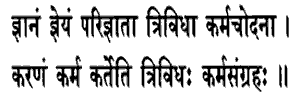
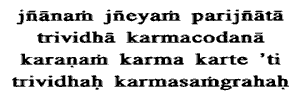
| 18. Knowledge,
the object known, the knower, (form) the threefold impulse to action ; the
organ, the end, the agent, from the threefold basis of action.Knowledge: any
knowledge, knowledge in general. Similarly the object known refers to objects
in general, to all objects of knowledge. The knower: the experiencer, partaking
of the nature of the upadhi, a creature of avidya. This triad forms the threefold
impulse to all action, to action in general. Indeed, performance of action
with a view to avoid a thing or to obtain another and so on, is possible only
when there is a conjunction of the three,knowledge, etc. The actions accomplished
by the five (causes of actionby the body, etc.; and grouped into three classes
according to their respective seatsspeech, mind, body; are a(1 traceable to
the interplay of the organ, etc.: and this is taught in the second part of
the verse. The organ: that by which something is done ; eternal organs being
the organ of hearing, etc and the internal organs being buddhi (intelligence),
etc. The end: that which is sought for, that which is reached through action
by the agent. The agent: he who sets the organs going, partaking of the nature
of the upadhi (in which he works). In these three all action inheres, and they
are therefore said to form the threefold basis of action. The impulses are
threefold according to the gunas. Inasmuch as action, the several factors of
action, and the fruit, are all made up of the gunas, the Lord now proceeds
to teach the threefold distinction of each, according to the three distinct
gunas, Sattva, Rajas and Tamas: |
| 18. "For Karma, Jnatru (the
knower), Jneya (the thing known), Jnana (knowledge); Kartu (the doer), Karma
(the action done), Karana the instrument of action)- such a triad of knowledge
is necessary Whether it is Jnana, Kartru or Karma, because they are of the
nature or essence of three Gunas (Sattva, Rajas and Tamas), a wise man (who
discriminates) should attain Satvika Jnana, be a Satvika Kartru (doer) and
perform Satvika Karma alone. |