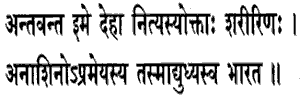
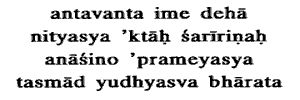
| 18. These bodies
of the embodied (Self who is eternal, indestructible and unknowable, are
said to have an end. Do fight, therefore, O descendant of Bharata.It is
said by the enlightened that these bodies of the Self, who is eternal, indestructible
and unknowable, have an end, like those seen in dreams or produced by a
juggler.The end of such objects as the mirage consists in the cessationas
the result of investigation into their nature by proper tests of truthof
the idea of reality which has been associated with them. So also these bodies
have an end No tautology is involved in the use of both eternal and indestructible;
for, two kinds of eternality and of destruction are met with in our experience.
The physical body, for instance, entirely disappearing when reduced to ashes,
is said to have been destroyed. The physical body, while existing as such,
may be transformed owing to sickness or such other causes, and it is then
said to have ceased to be (something) and to have become (something else).
Eternal and indestructible here imply that the Self is subject to neither
sort of destruction. Otherwise, the eternality of Atman, the Self, might
perhaps be understood to be like that of clay or other material objects.
It is the denial of this which is conveyed by the two epithets.The Self
is unknowable,not determinable by the senses (pratyaksha) or any other means
of knowledge.(Objection):The Self is determined by the Agama or Revelation,
and by perception, etc prior to Revelation.(Answer):The objection is untenable,
for the Self is selfdetermined (svatassiddha). When the Self, the knower
(pramatri), has been determined, then only is possible a search for proper
authorities on the part of the knower with a view to obtain right knowledge.
|